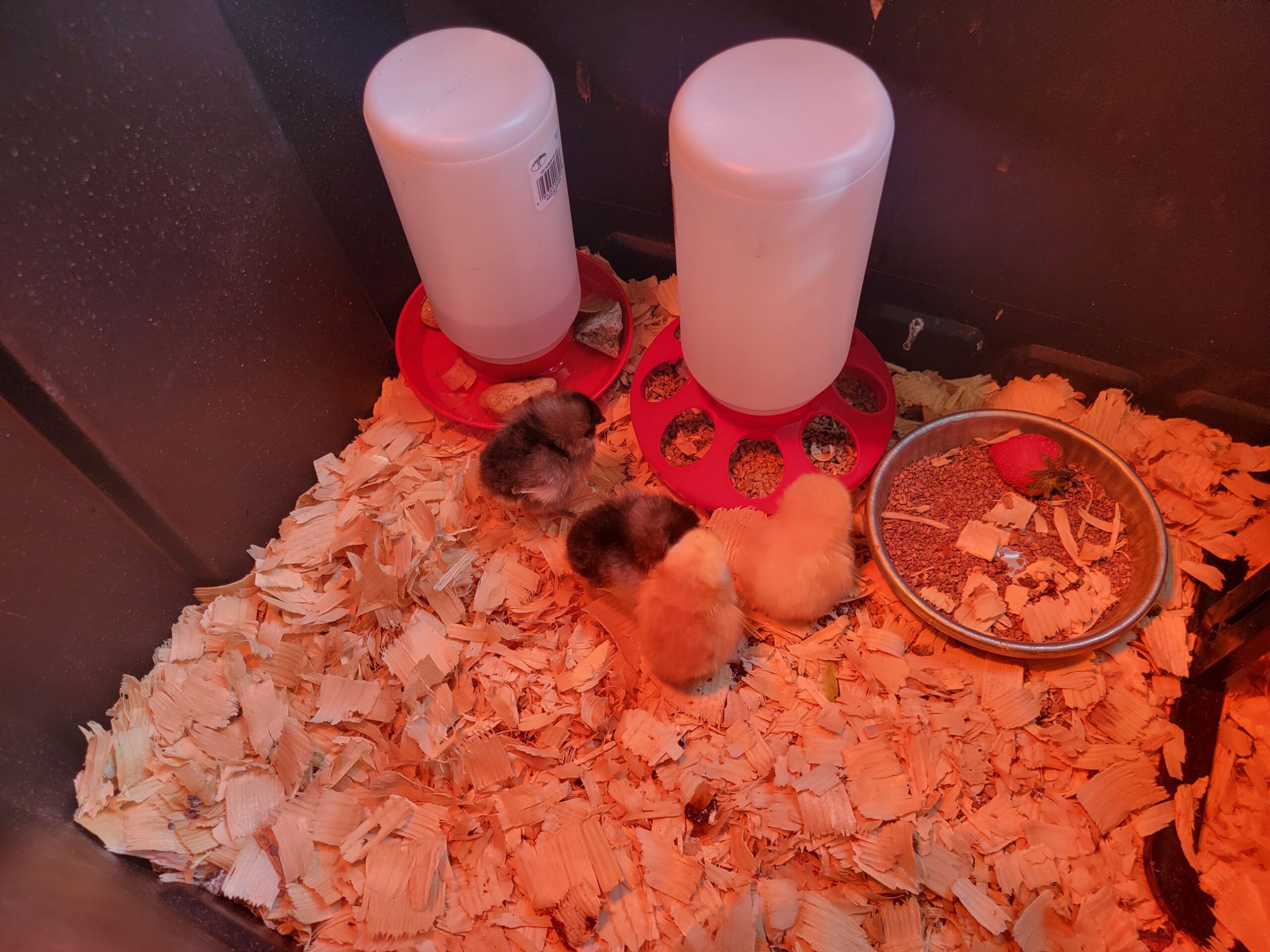
If you just got baby chicks, having the right setup from the start makes a huge difference in how healthy and successful they will be. Over the years I have picked up a few tips that help prevent common problems and make raising chicks much easier.
In this guide I’m going to share what has worked best for me when caring for baby chicks, including brooder setup, bedding, temperature, food, and safety. The number one job as a chicken owner is to protect your birds, whether that is from predators, sickness, or poor living conditions. When dealing with baby chicks, a few simple steps can prevent a lot of problems later.
Brooder Setup for Baby Chicks
The foundation of properly caring for baby chicks starts with the right brooder setup. Before you even bring your chicks home, you want to have a basic setup ready so you can take proper care of them right away.
A brooder does not have to be expensive or special. It just needs to be sturdy and big enough to hold the number of chicks you are getting. A plastic tote or large box can work well. Baby chicks do not need a huge space, but they need enough room to move around freely to reach food and water.
A plastic tote seems to work best for overall cleanliness because not as much sticks to it and it can easily be washed out with a hose.
The bedding you choose also makes a difference when it comes to odor, dust, and how often it needs to be changed. During the first 24 hours of having chicks, I recommend using regular paper towels on the bottom of the brooder. This makes cleaning easier and helps prevent chicks from eating bedding by mistake.
After the first day, switching to hemp or cedar shavings works well for overall health. Pine bedding is not recommended for chicks because the dust can be harmful. Hemp is less dusty than cedar, but both can work. A light 1 to 2 inch layer at the bottom of the brooder is enough. Too much bedding can cause a buildup of moisture, food, and waste, which can lead to mold or unhealthy conditions.
Changing bedding once or twice a week will help keep things clean and keep your chicks healthy.
How to Keep Baby Chicks Safe from Predators
For baby chicks, who will spend most of their time inside a brooder, predator protection usually starts with house pets. Cats, dogs, and other animals can easily injure or kill a chick if they get access to them.
Proper training with house pets or barn animals needs to be done in some way to make sure your chicks stay safe. Restricted access or using a pet-proof brooder can help prevent problems. A small chick can easily become a snack for a cat or dog.
We cannot watch the chicks 100 percent of the time, but during this stage of their life it is very important to check on them often and make sure they look healthy and active.
Another “predator” that people forget about is small children. They may not mean to hurt a chick, but handling them too often or too rough can cause problems. Curiosity in children is normal, especially if they are helping raise chickens, but extra care should always be taken to keep both the chicks and the children safe.
Common Baby Chick Health Problems
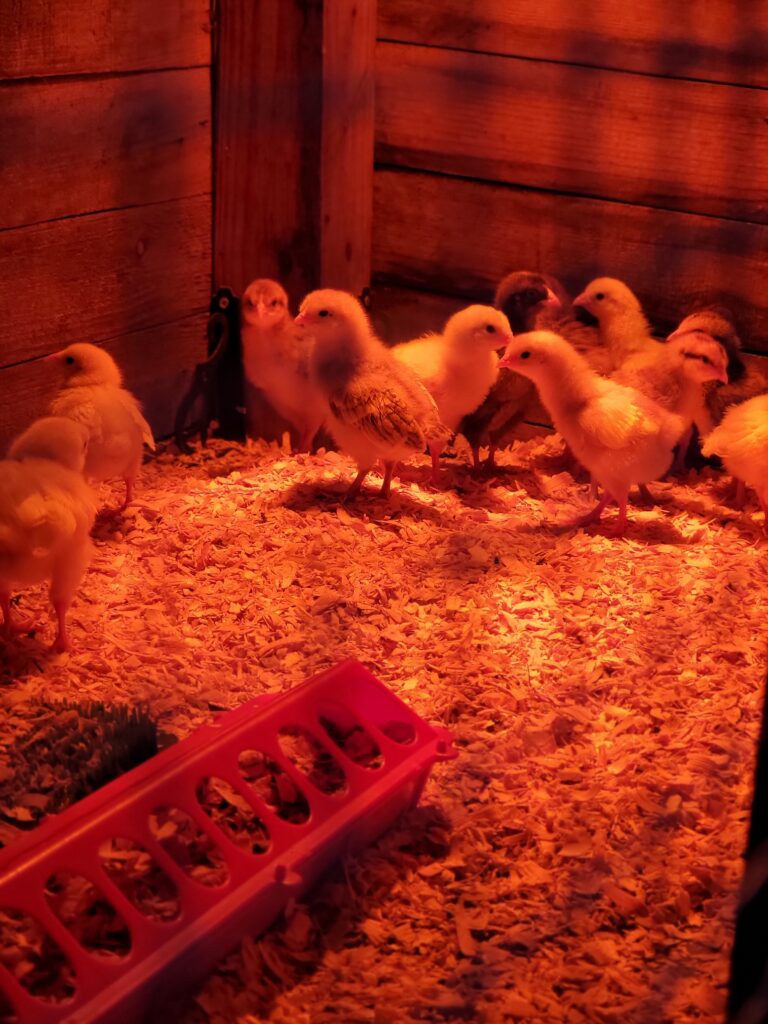
Whether you order chicks online or pick them up from a local feed store, they are usually only a few days to one week old. Because they are so young and small, it is important to pay attention to their environment, diet, and temperature.
Within the first 24 hours of having your chicks, adding powdered probiotics or electrolytes to fresh water can be very helpful. After traveling, chicks can be dehydrated or stressed, and the extra minerals can give them a boost.
Clean water is very important. Water should be checked often and kept free of bedding or waste. You also want a water dish that is not too big, so chicks cannot fall in, but not so small that it keeps them from getting enough water.
For feed, there are many brands of medicated and non-medicated starter feeds. Medicated feed can help prevent some sickness, but it is not required in every situation. Most starter feeds work well as long as they are made for chicks.
Small pieces of fruits and vegetables can also be given, but they must be cut small so the chicks do not choke. Chickens do not have teeth, so if you give treats, chick grit should also be provided to help them digest food.
One common problem in baby chicks is what people call “pasty butt.” This happens when waste sticks to the feathers under the chick’s vent and blocks it. If it is not cleaned off, the chick can get very sick or even die.
Checking your chicks daily will help catch this early. If you see buildup, gently rinse the area with warm water to loosen it and wipe it away carefully. Never pull hard on stuck pieces, because it can cause serious injury.
Taking care of diet, water, and cleanliness will help keep your chicks healthy.
Baby Chick Temperature Guide
Keeping the right temperature for baby chicks is very important. In the wild, chicks stay under their mother to stay warm, so when raising them yourself, you become the source of heat.
During the first week, the brooder should have an area around 90 degrees. The entire brooder does not have to stay at that temperature, but chicks need a warm spot they can go to when needed.
A heat lamp or brooder plate can be used. If using a heat lamp, it must be secured properly and placed at the correct height. If the lamp is too close, it can overheat the chicks or even cause a fire. If it is too far away, the chicks will not stay warm enough.
You can tell if the temperature is right by watching the chicks. If they stay as far away from the heat as possible, it may be too hot. If they huddle tightly under the heat source, it may be too cold.
During the second week, the temperature can drop to around 80 to 90 degrees. Each week after that, you can lower the temperature by about 10 degrees as the chicks grow feathers and can handle cooler weather.
A brooder plate is also a good option because it gives the chicks a place to go under for warmth, similar to a mother hen.
When Baby Chicks Can Go Outside
After about three weeks, if the weather is warm enough, chicks can start spending short periods outside during the warmest part of the day. Around 60 degrees or warmer is usually safe if they are protected.
By the fourth week, they can spend more time outside during the day, which helps them grow stronger feathers.
You still need to watch them closely during this stage because they are small and vulnerable. Bringing them inside at night is still recommended until they are fully feathered.
Around five to six weeks old, most chicks can stay outside full time as long as they have shelter, food, water, and protection from predators.
Raising baby chicks is not difficult, but having the right setup from the beginning makes everything much easier. Making sure they have a clean brooder, proper heat, fresh food and water, and protection from predators will help them grow into strong healthy chickens.
If you take care of the basics, you will avoid most of the common problems people run into when raising chicks.
Before long, you will be on your way to having a healthy flock.
Recommended Supplies for Baby Chicks
- Brooder tote
- Heat lamp or brooder plate
- Chick starter feed
- Chick waterer
- Bedding
- Electrolytes / probiotics
Leave a Reply